
Table of Contents
Professor Scott Galloway wrote a personal finance book. Given his following and other excellent content, it’s no surprise it became an instant #1 New York Times Bestseller. But should you read it?
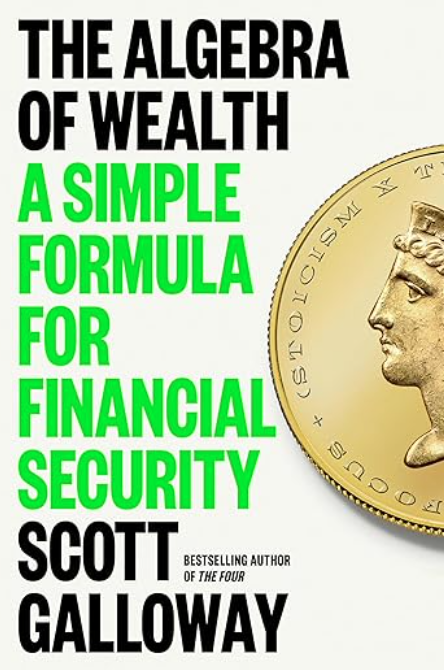
This book review of The Algebra of Wealth: A Simple Formula for Financial Security will answer that for you by sharing Professor Galloway’s framework, focus areas, and things he didn’t cover.
Framework
Every good personal finance book has a financial success framework. My book, Beyond the Basics: Maximizing, Allocating, and Protecting Your Capital has three parts covering building your capital, investing your capital, and protecting it along the way.
Professor Galloway’s framework is:
Wealth = Focus + (Stoicism x Time x Diversification).
Stoics
He starts with Stoicism, a philosophy seeing a Ryan Holiday driven resurgence that Galloway recommends because “stoics regard the development of one’s character as the highest virtue, and they have written at length on its pursuit.”
What’s the connection to building wealth? In Professor Galloway’s Algebra of Wealth formula, building character aligns your short-term behavior with your best financial intentions.
Stoics identified four virtues: courage, wisdom, justice, and temperance. Professor Galloway explains and extols them all and believes temperance is most important given our consumption culture.
“Capitalism’s genius is inventing new things for us to spend money on that feels like needs, not wants.”
There’s advice on building healthy habits with some classic Galloway material about the right relationships, giving back, and choosing the right partner. Each chapter ends with a review and action items.
Focus
Focus is about career advice and earning income –
“Figure out how to simplify and streamline your life so you can focus on what matters. Then do that.”
There’s good advice in here I will share with my adult kids, and a Galloway gem that following your passion is a mistake. Instead, follow what you’re good at since you’ll become passionate about it. Galloway also recommends networking early to build allies and supporters.
Time
Time is about compounding with your investments and life.
“The impact of our actions compound across all domains, from the development of habits to the strengthening of relationships.”
Professory Galloway shares the traditional advice to start early, understand inflation’s impact, save, budget, and invest in appropriate buckets.
Then he drops this.
“Social media is likely one of the great wealth destroyers in history. It robs young people of years of time when they need it most – when investing in work and (real) relationships can compound.”
He urges readers to review their phone’s screen time reports and compare hours spent on social media with studies showing it ranks last in activities that contribute to happiness.
Love it.
Galloway also recommends working with a financial planner, calling them the key figure in the wealth puzzle. He suggests finding a fiduciary RIA who is a CFP® or CFA, emphasizing you’re paying for accountability and planning expertise—not investment outperformance.
Finding a Good Financial Advisor gets into this in greater detail.
Diversification
Diversification covers investments differently than most personal finance books I’ve read. It’s light on investing and financial planning advice and focuses on explaining capitalism, the economy, and different asset classes.
Given the book’s focus on behavior and habits, some Professor Galloway gems on behavioral investing mistakes would have been great, but we didn’t get many.
Final Thoughts
Overall, I’d recommend this book for those interested in career advice, building good habits, learning about how stocks and bonds are valued, understanding the economy and capitalism, and what the different asset classes are.
For other topics, I’d focus elsewhere.
Here’s a list – Best Financial Literacy Books – broken down by category and difficulty level I regularly update. My book review of The Algebra of Wealth by Professor Scott Galloway is that it doesn’t belong on this list, but is worth a read for the right people.
FAQs about The Algebra of Wealth
1. What is the main formula in The Algebra of Wealth?
Professor Galloway’s formula is Wealth = Focus + (Stoicism × Time × Diversification). It blends timeless principles like discipline, compounding, and risk management into a simple framework for financial security.
2. Who should read The Algebra of Wealth?
This book is best for readers seeking career advice, mindset development, and practical financial habits. It emphasizes behavior, character, and compounding rather than deep technical investing strategies, making it useful for professionals and young adults building wealth foundations.
3. How does Stoicism relate to building wealth?
Stoicism teaches courage, wisdom, justice, and temperance. Galloway argues that these virtues help align short-term decisions with long-term financial goals. Temperance, in particular, helps counter consumer culture by encouraging moderation and avoiding unnecessary spending.
4. What unique advice does Galloway provide about time?
Galloway warns that social media is a “great wealth destroyer” that drains productive years from young people. He emphasizes investing early in work, relationships, and habits that compound over decades, creating both financial and personal wealth.
5. Is this book a complete financial planning guide?
Not exactly. The book offers strong insights into behavior, career, and philosophy but is lighter on detailed financial planning strategies. For in-depth investing or retirement planning, readers may want to supplement with other personal finance books.