
Something I’ve learned as a financial advisor working with business owners is that the decision of when to sell your business should factor in the broader market and economic environment.
If you want to sell your business within the next few years, you should consider whether it makes sense to do so while the economic and deal environment remain favorable. That matters even if you consider your business recession resistant. During downturns, buyers become more conservative, financing is harder to secure, deal activity slows, valuations fall, and the buyer pool shrinks.
That becomes a retirement-planning problem. Many business owners prioritize reinvesting in their companies over building a sizable retirement portfolio, which makes getting a favorable price for the business especially important. If economic conditions prevent that, you may have to run the business longer than planned. And if the business itself weakens during a downturn, it could take years to return to the value it had when you originally wanted to sell.
A sale during a good economy allows you to pitch a story about continued strong growth to buyers. Selling during a bull market also helps your valuation as public markets influence private company valuations.
I don’t know when the next recession will arrive, but as I discussed in The Biggest Risk Isn’t a Crash – It’s a Lost Decade, we’ve been in a lengthy secular bull market, and aside from the two-month Covid-19 blip, we haven’t had a recession since 2009.
The traditional economic cycle has four phases: expansion, peak, contraction, and trough.
What makes using macroeconomic forecasting impossible is that cycles vary dramatically in length, as do the phases, and we don’t know we’re in a new phase until after the fact.
What causes recessions also varies.
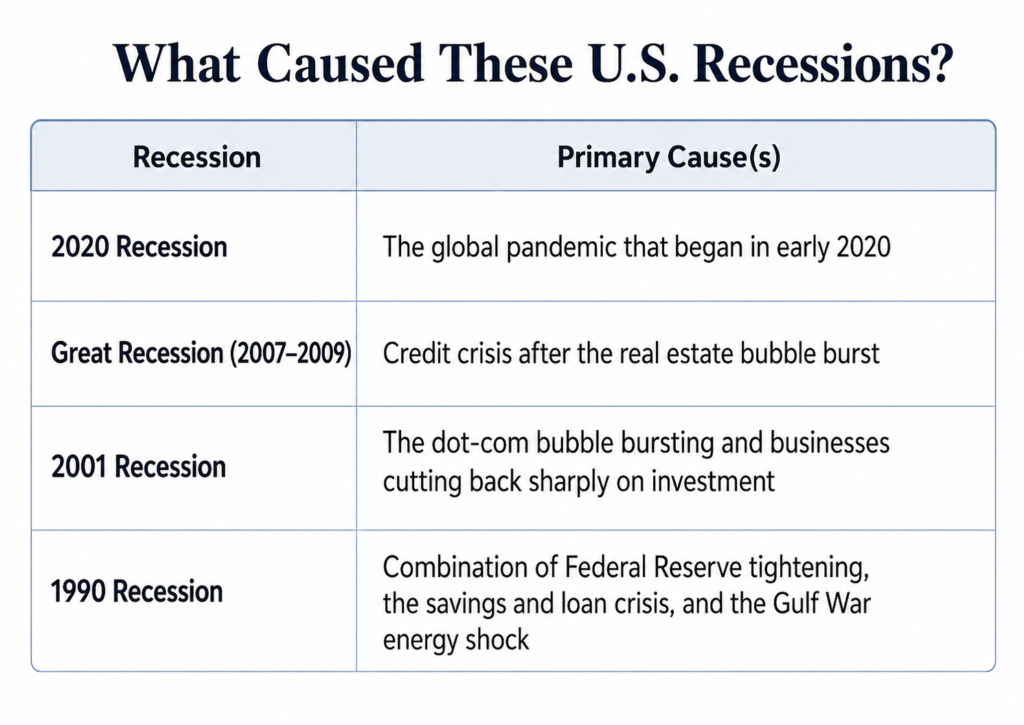
That said there are common causation threads:
- Weaker spending
- Higher interest rates
- Tighter credit
- Falling confidence
- Bursting asset bubble or a financial crisis
- External events like war or oil shock
When to Sell Your Business: The Economic Factors
Some of these threads are present today although their durability and extent are debatable:
- Higher rates
- Low consumer confidence (although strong consumer spending)
- High oil prices due to a war
- AI-bubble concerns
- Elevated mortgage rates.
The jobs market is hard to read. I’d also add that since a transaction can take up to a year, the economic and M&A environment can be different by the time a transaction closes.
Interest rates deserve particular attention because they affect both the economy and the financing available to potential buyers.
Rates have risen substantially from their post-GFC lows. Some of that increase simply reflects normalization from the unusually low rates that followed the financial crisis. But rates had already been moving higher before the war, and other pressures remain: inflation is still above the Fed’s 2% target, the war remains unresolved, rates are rising in other developed countries, markets are expecting rate hikes, the government must issue more debt to fund persistent deficit spending, and the Fed continues to unwind its balance sheet.
Readers and listeners know I’m not in the prediction game.
The lesson here isn’t that a recession is imminent, or that you can perfectly time one. It’s that business owners shouldn’t assume favorable economic and deal conditions will persist indefinitely.
There are many considerations that go into deciding when to sell your business. If selling within the next few years is already part of your plan, consider whether today represents a sufficiently attractive exit window rather than risk being forced to wait through a downturn to get back to where you are now.
Related Reads
Someone Offered to Buy Your Business