
In Your Money This Week, bond yields are rising and that’s a problem.
Using the 10 Year Treasury, they’ve risen from a Covid-era low of below 1% to more than 4.7% five years later.
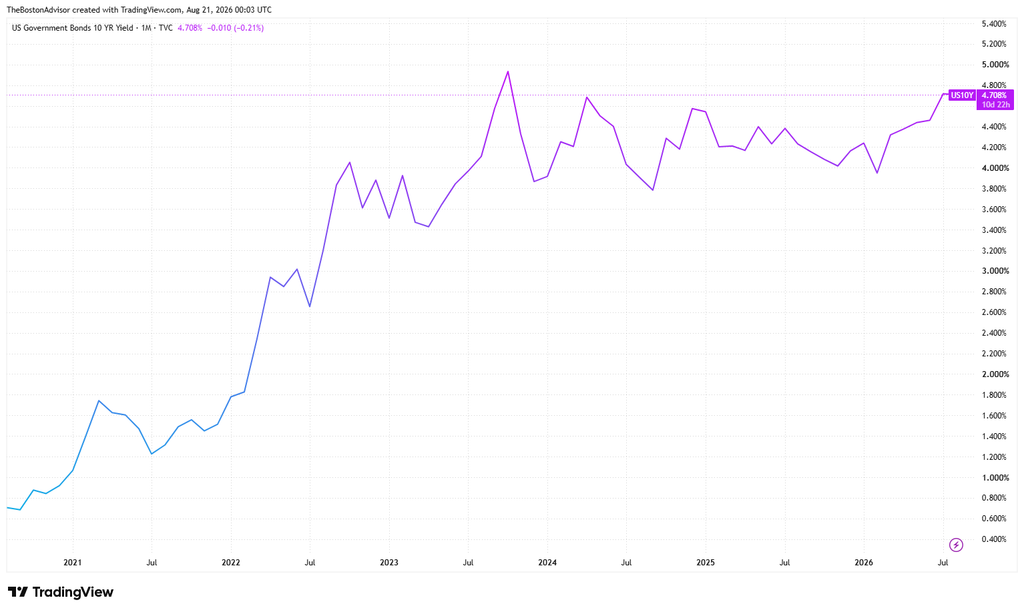
And more recently they’ve jumped from below 4% at the end of February this year.
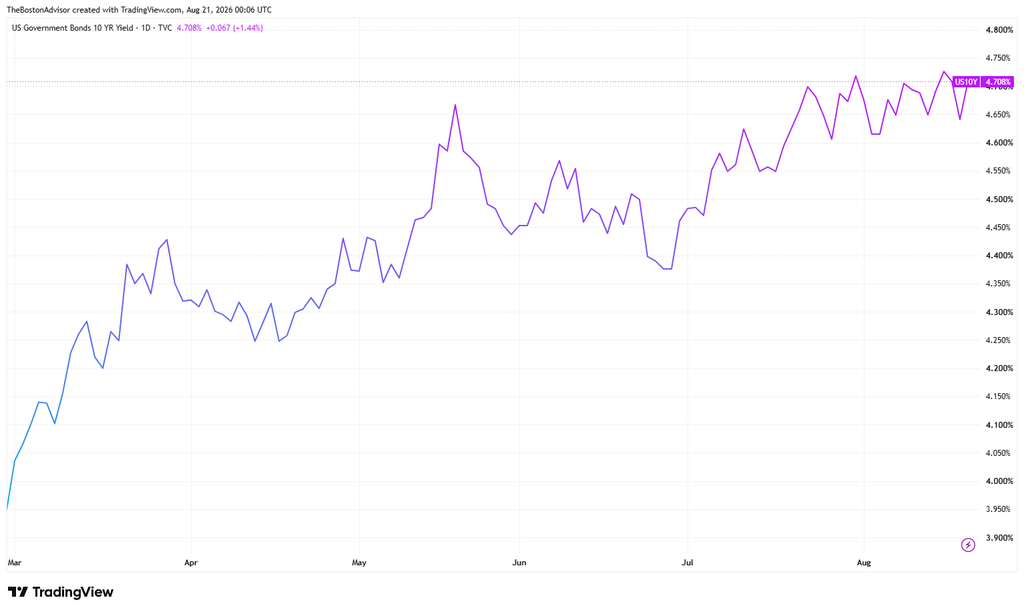
This coincides with the Iran war starting, which complicates things. Should we attribute the rise in rates to the conflict’s inflationary nature and shrug off concerns? Or do we focus on the longer trend and other factors that could cause this rising rate environment to continue and react accordingly?
Many market commentators and investment professionals are doing the latter. Their concerns are:
- Inflation stubbornly above the Fed’s 2% target
- Rising debt-to-GDP fueled by large deficit spending
- Uncertainty from the new Fed Chair
- Massive debt issuance by governments
- AI hyperscalers who are paying for their AI arms race by issuing debt – $2 trillion just this year according to one estimate.
To explain the last two quickly, all that debt being issued requires higher yields to attract buyers amidst the competition.
The Treasury announced bond buybacks this week to attempt to stem the tide in rising yields, but after a one day reprieve, yields came back to where they were.
But this could just be all about Iran, right? After all, rates were below 4% before the conflict started.
Yes, but…
Investors have been nervous about deficits and rising debt levels for a long time, and my rebuttal to them has always been, why doesn’t the bond market seem to care (via elevated yields)? Now that we have higher yields, it feels disingenuous to throw an asterisk on them.
Plus, even if it is all Iran, does anyone think that conflict is ending soon? If so, check out the second article below in the Weekly Reads talking about how Iran is ramping up its strategy and aggression.
Rising bond yields are a problem for the economy. Higher Treasury yields flow through to mortgages, corporate borrowing and other loans, making it more expensive for consumers to buy homes and for businesses to borrow and invest, while also putting pressure on asset prices. They basically tighten financial conditions similar to Fed rate hikes, and if yields are rising because inflation remains too high, the Fed could be forced to raise rates, further harming the economy.
So, what do you do about it?
I recently addressed this topic with business owners in this post – When to Sell Your Business: Economic Timing Matters. For everyone else, it’s reasonable to expect choppier times ahead. Prepare for them by reviewing your portfolio to make sure you’re diversified, your asset allocation matches your risk tolerance and time horizon, you have enough cash set aside in a rainy day fund for short-to-mid term expenses, and hope my newfound pessimism is unwarranted. After all, markets tend to churn higher climbing a wall of worry and policy makers and politicians don’t like bad economies and weak stock markets.
Weekly Reads
AI Is Driving Up Treasury Yields: ‘It Just Touches Everything’ by Bloomberg
Bond yields are facing upward pressure because governments and corporations are competing for the same pool of investor capital, with investment-grade companies issuing nearly $1.5 trillion of bonds this year, up 36%. AI is adding significantly to that competition: the biggest tech companies have borrowed roughly $200 billion, prompting some bond investors to sell Treasuries to buy higher-yielding corporate debt and potentially pushing the 10-year Treasury yield about 0.3 percentage point higher. With trillions more in AI infrastructure spending expected, the borrowing needed to finance it could help keep longer-term interest rates elevated even if Treasury issuance is restrained.
See also: The AI buildout comes to the bond market by Vanguard and Why Bond Yields Are Rising—and Might Keep Heading Higher by Morningstar
Iran’s Secret Plan to Escalate the War by The Wall Street Journal
Iran’s leadership has used the past two months to prepare for a larger conflict rather than count on diplomacy, putting more military power under the Revolutionary Guard, rebuilding missile infrastructure, increasing missile and drone production, and expanding attacks on shipping, U.S. forces and Gulf energy infrastructure. The strategy is to broaden the conflict and increase its economic and military costs for the U.S. and its regional partners, while rebuilding Iran’s ability to withstand and retaliate against another major attack. With Iran’s leaders viewing the current diplomatic pause as potentially temporary and preparing the country for sustained confrontation, the strategy makes a prolonged war more likely even if negotiations continue.
U.S. Economic Outlook: August 2026 by Wells Fargo
The economy is still expanding but unevenly, with consumer spending holding up and AI investment providing significant support, while housing remains sluggish and the labor market has lost momentum. Consumers entered the third quarter with solid spending momentum, manufacturing and business investment are showing tentative signs of broadening beyond AI, and inflation pressures are becoming less widespread, although inflation remains above target. The softer labor market and improving inflation picture are expected to keep the Fed on hold, but large deficits, surging corporate bond issuance and other structural pressures could keep longer-term interest rates elevated even without additional Fed hikes.
Long-Term Care: Are You Planning or Just Hoping? by Savant Wealth
Long-term care can cost more than $100,000 a year for a private nursing-home room or around $73,000 for assisted living, potentially depleting retirement savings quickly when care lasts several years. Planning ahead means deciding what type of care you would prefer, understanding how your assets, income and insurance could pay for it, and considering long-term care insurance or insurance riders where appropriate. It also means putting legal documents such as powers of attorney and advance directives in place and discussing the plan with family before a health event forces everyone to make expensive decisions under pressure.
Book Recommendation
Operation Paperclip: The Secret Intelligence Program that Brought Nazi Scientists to America by Annie Jacobsen
The fascinating story of America’s secret post-WWII science programs, from the New York Times bestselling author of Area 51 and Biological War.