
Recent articles in the Wall Street Journal and Bloomberg have focused on the financial challenges facing people who’ve come into life-changing money through a liquidity event, whether it’s a tech IPO, business sale, or real estate deal.
I’ve spent 25 years helping clients plan around these transactions. I’ve also been through it myself, first as a shareholder in a private company that went public and more recently as CEO when Heritage Financial joined Savant Wealth Management. What follows is what I’ve learned, professionally and personally, about what to do and avoid when your net worth jumps.
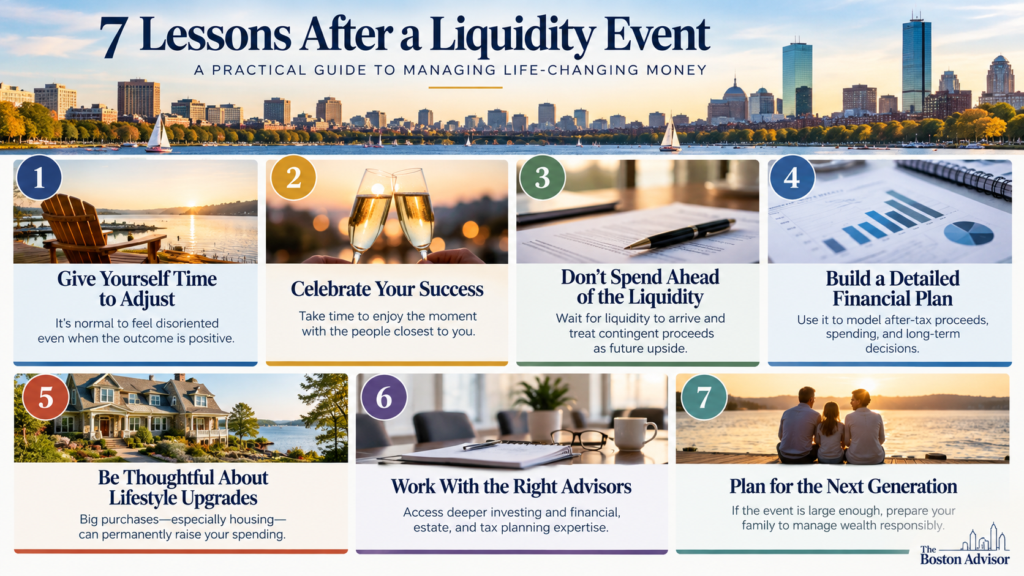
Acknowledge, Celebrate, and Be Patient
First, give yourself a break. It’s OK to be disoriented while also being happy with your good fortune. Don’t feel guilty if you’re stressed or feeling pressure as you navigate a positive financial change and think about your future plans.
Second, do something with loved ones to celebrate your success. Take a nice trip, make a special purchase, give gifts, etc. You won’t regret or forget it.
Third, be patient. You can get into trouble by overdoing the spending early on, particularly if you spend large sums before receiving your full liquidity. That could mean spending before the first check arrives, or spending based on an expected earn-out or a second stage of liquidity via an equity roll. Those may not pan out as projected, so plan around the cash you receive at closing and treat anything contingent as future upside for later.
You don’t get into trouble waiting for dollars to arrive, but I’ve seen people run into problems when they spent early and later had to backtrack in costly fashion when things didn’t materialize as expected.
Start Planning
Fourth, to avoid spending problems and help you understand what this new wealth means, build a detailed financial plan. If built early enough, it can also help you make decisions related to the liquidity event itself, including transaction structure, tax planning, and areas to focus on in negotiations.
Done correctly, it will model your after-tax proceeds, take your current budget and adjust it for work and lifestyle changes (Building Your Retirement Budget walks you through this), incorporate different planning scenarios, model your financial future, and serve as a guidepost for informed financial decisions. It can also help with future tax and estate planning.
Fifth, be thoughtful about major lifestyle upgrades. As I shared in Beyond the Basics: Maximizing, Allocating, and Protecting Your Capital:
The best predictor of consumption is your home’s value (not income or net worth). A bigger home results in a bigger mortgage, higher property taxes, larger utility and landscaping bills, and more square footage to maintain.
Enjoy your success, but be thoughtful about where you live if you upgrade. Make sure it’s affordable and that the extra expenditure is worth it to you. The wrong choice can lead to a lifetime of overspending.
Sixth, accept the reality that you will likely need to work with some new professional advisors (or hire them for the first time) to help manage a larger portfolio, plan for taxes around the liquidity event, update your estate plan, and handle other financial decisions.
Include Your Family
Seventh, if the liquidity event is large enough, you need to do some multigenerational planning. A Die With Zero mindset is great, and I won’t try to talk you out of it, but it can be difficult to execute when you’ve lived your life a certain way.
The more practical and responsible thing to do is assume that you won’t spend it all and prepare your family for how to manage their money after you’re gone. My guidance to clients who value good financial advisors is to find one for their children. That’s why we built the Heritage Generations Group to work with our clients’ family members at Heritage Financial.
It’s hard to teach someone to become a personal finance expert, and the cost of failure is high. But you can teach them to be good clients who can evaluate whether they’re receiving solid advice from trustworthy people and avoid the most common financial planning and investment mistakes.
Conclusion
A liquidity event can change your financial life for the better, but it also requires new decisions. Celebrate it, be patient, build a plan, and give yourself time to understand your new financial life.